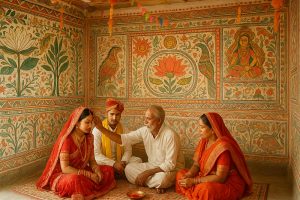
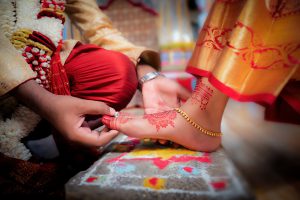
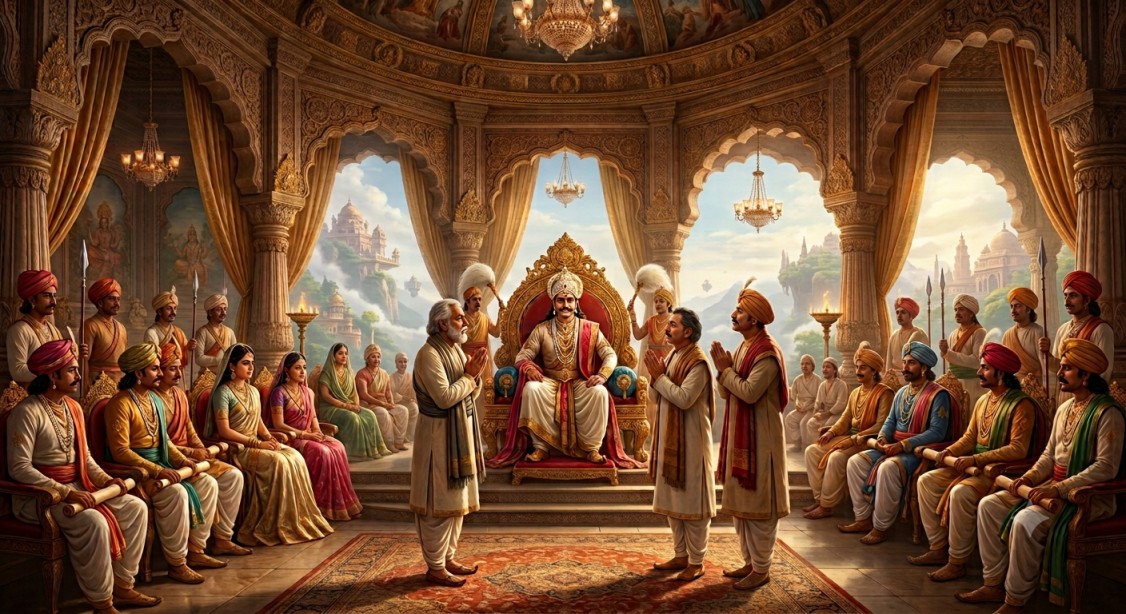
Vedic marriages are not just social contracts—they are sacred samskāras (rites of passage) deeply rooted in the Vedas and upheld through centuries of tradition. Each ritual symbolizes a step in the spiritual, emotional, and practical unification of two individuals and their families, bound together through dharma (righteous duty).
A typical Vedic marriage ceremony includes a series of meaningful and symbolic rituals, each with its own mantra, gesture, and purpose. These rituals collectively invoke divine blessings, align the couple’s life journey with cosmic order (ṛta), and mark the transition into gṛhastha āśrama—the householder stage of life.
Key Rituals in a Vedic Marriage Include
- Ganapati Puja: Invoking Lord Ganesha to remove obstacles at the start.
- Kanyadāna: The sacred offering of the bride by her parents.
- Pāṇigrahaṇa: The groom holding the bride’s hand, signifying acceptance.
- Vivāha Homa: Fire ritual with offerings to Agni, the divine witness.
- Saptapadi: Seven steps around the fire, each step symbolizing a marital vow.
- Maṅgalsūtra Dhāraṇa & Sindūr Dāna: Symbolic adornments of marriage.
- Āśīrvāda: Blessings from elders and the community for a prosperous life.
These rituals may vary slightly across regions and customs, but the core Vedic essence remains unchanged—a marriage based on mutual respect, spiritual growth, and harmony with nature and society.
Let’s learn about these rituals.
Vighneswara (Ganesha) Puja
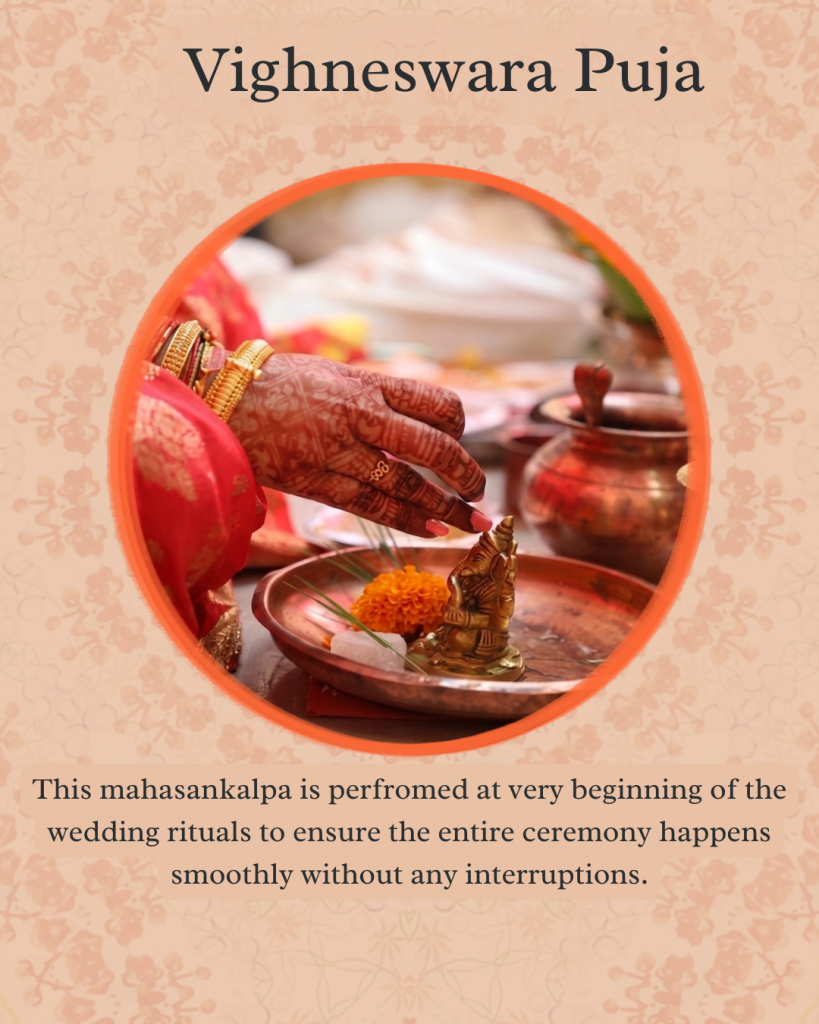
Dhyana (Meditation / Invocation of Lord Ganesha)
In the Vedic marriage tradition, the ceremony begins with prayers to Lord Ganesha, the remover of obstacles. This opening shloka is chanted during the initial sankalpa and Ganesha Puja—often before a murti or a simple Haridra Ganesha—so that divine blessings purify the space and the couple may enter gṛhastha āśrama with clarity, harmony, and an unobstructed beginning.
Kanyadaanam
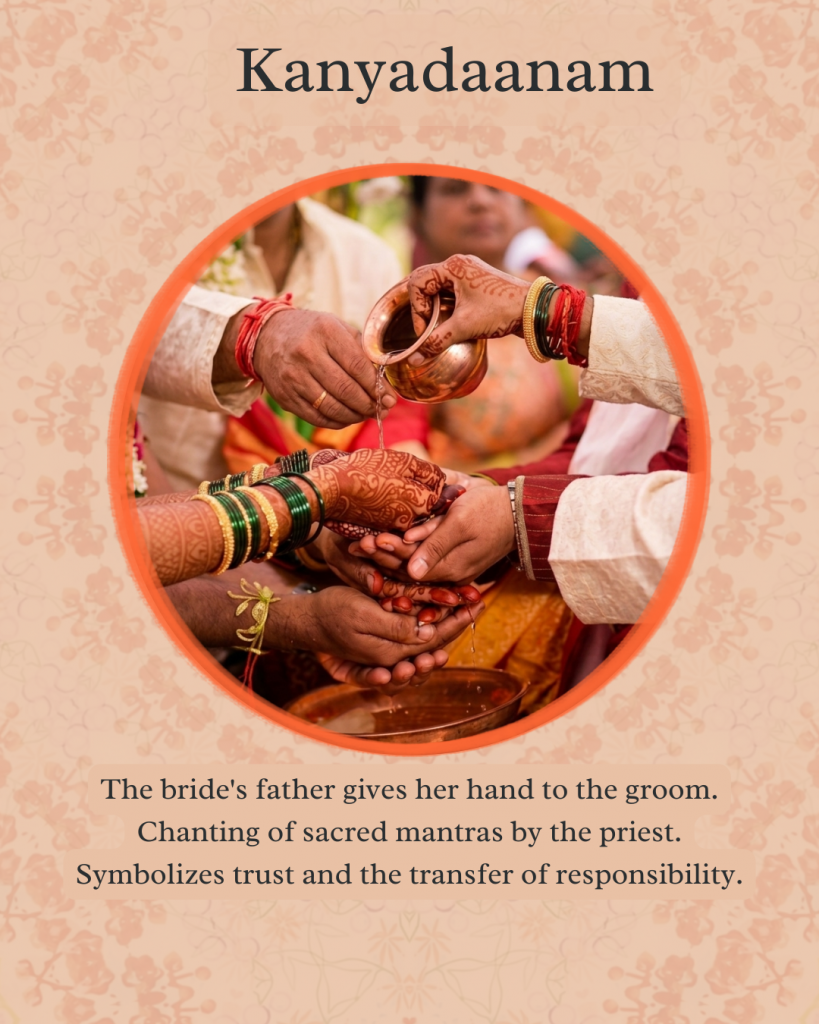
Kanyadāna is a sacred Vedic ritual where the bride’s parents formally offer their daughter to the groom, symbolizing the giving away of their most precious possession. It is performed with heartfelt prayers, invoking blessings for the couple’s prosperous and virtuous life together. This act signifies trust, responsibility transfer, and the union of two families through dharma.
Vivāha Homa
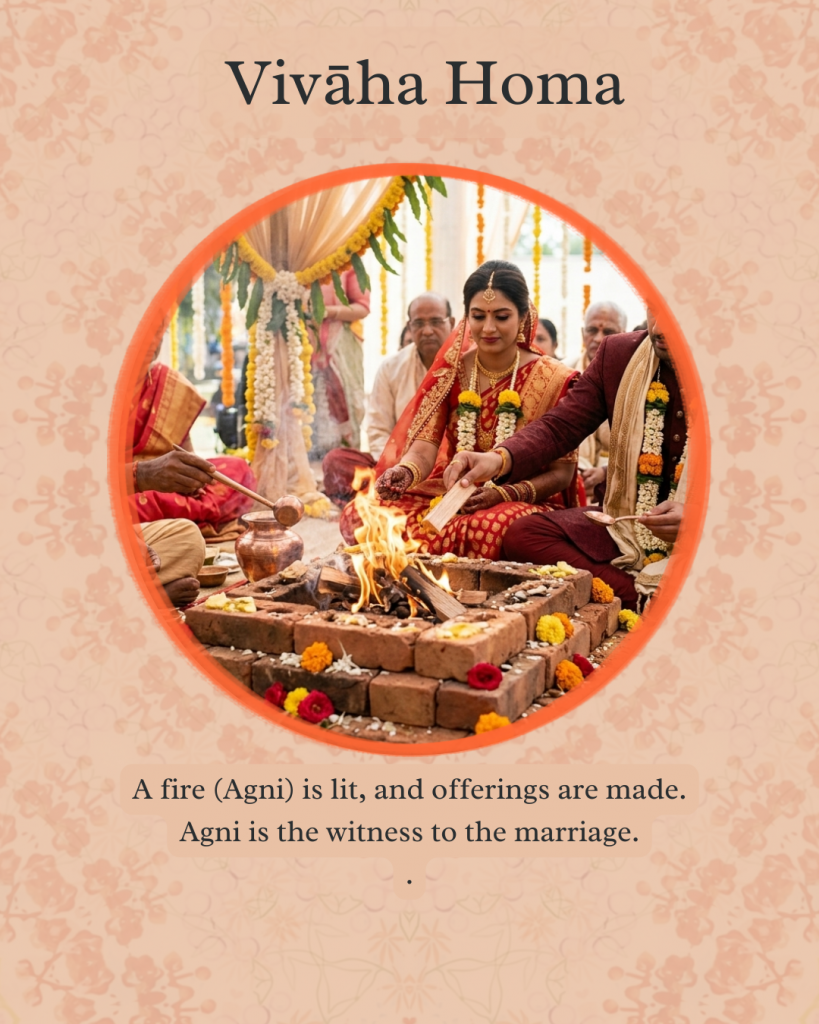
Agni Avāhana (Invoking the Fire God)
Samidha Dāna Mantra (Offering of sacred twigs to Agni)
Vivāha Homa is the sacred fire ritual performed during a Hindu Vedic wedding, signifying the spiritual union of the bride and groom in the presence of Agni (the fire god), who acts as a divine witness.
Pāṇigrahaṇa
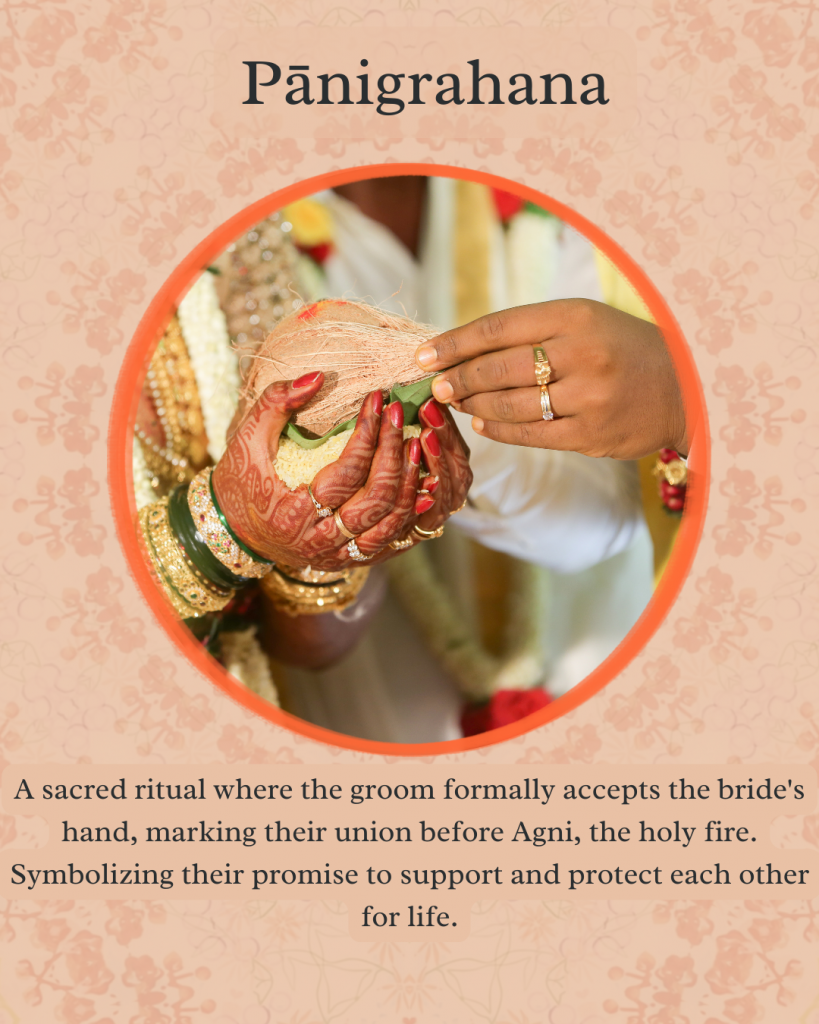
Pāṇigrahaṇa (literally “taking the hand”) is one of the most sacred and emotionally significant rites in a Vedic marriage. It marks the moment when the groom formally accepts the bride as his wife by holding her hand in front of the sacred fire (Agni), symbolizing their union in duty, love, and dharma.
Saptapadi
Saptapadi is the ritual of taking seven sacred steps around the fire (Agni) by the bride and groom during the Vedic marriage ceremony. With each step, a vow (vachan) is made, binding them spiritually and legally as life partners.
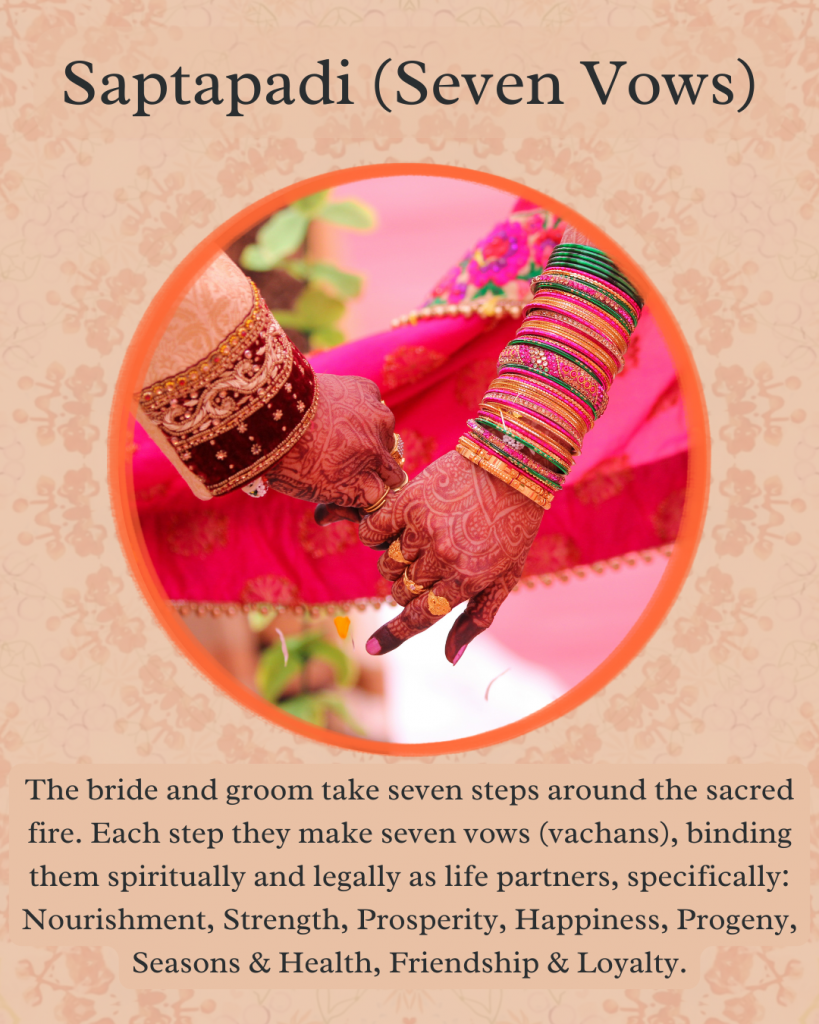
1st Step – Nourishment
2nd Step – Strength
3rd Step – Prosperity
4th Step – Happiness
5th Step – Progeny
6th Step – Seasons & Health
7th Step – Friendship & Loyalty
Maṅgalsūtra Dhāraṇa & Sindūr Dāna
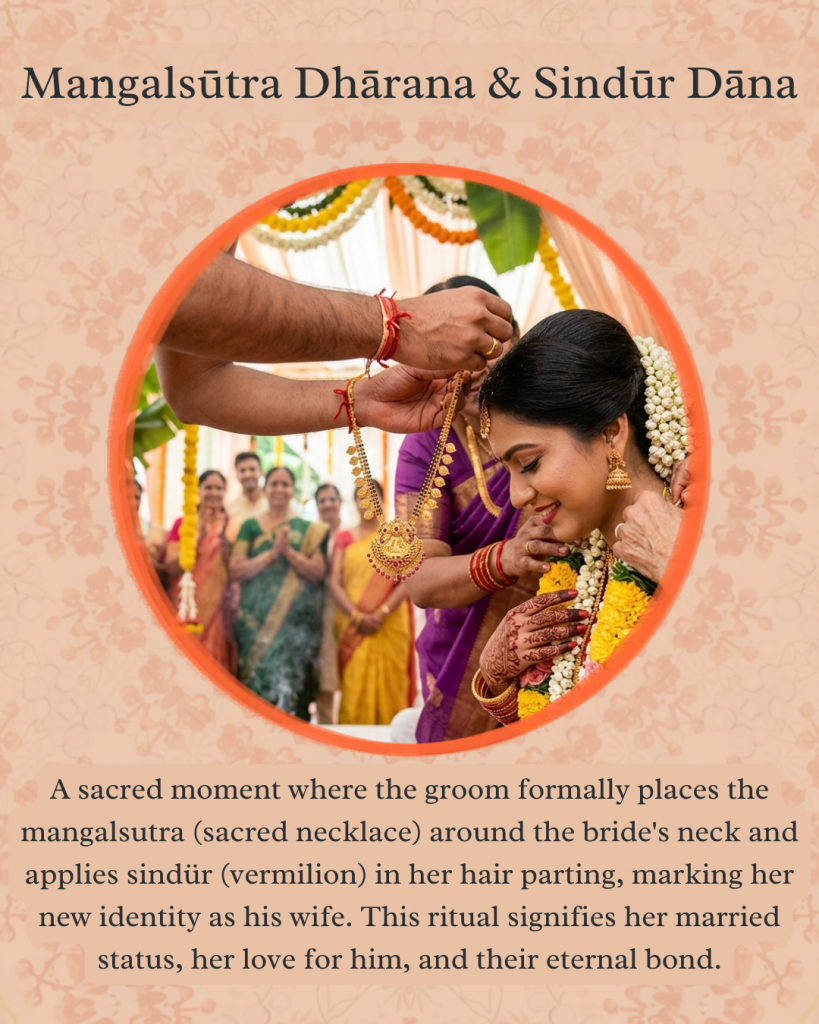
In a traditional Vedic marriage, Maṅgalsūtra dhāraṇa (tying of the sacred thread) and Sindūr Dāna (vermilion offering) are two of the most emotionally significant and symbolically powerful acts that represent the bride’s transition into her new life as a suhāgin (married woman).
Āśīrvāda
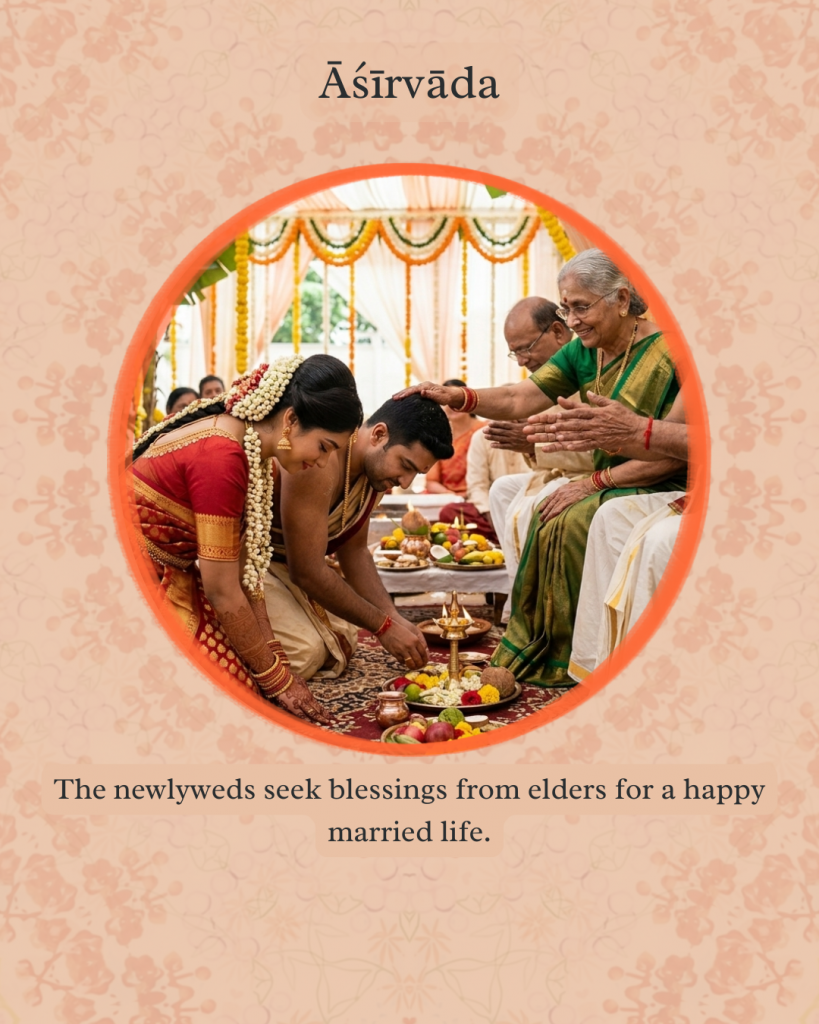
Āśīrvāda (आशीर्वाद) means “blessing” in Sanskrit. It is a crucial closing ritual of the Hindu marriage ceremony where the elders, priests, and guests bless the newly married couple for a prosperous, virtuous, and harmonious life.
Planning a ceremony rich in these rituals? VedicMarriage.com supports traditional Vedic vivah — ritual-literate, kundli-matched, family-guided matchmaking — and free kundali matching.