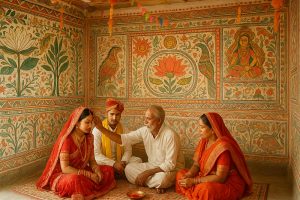
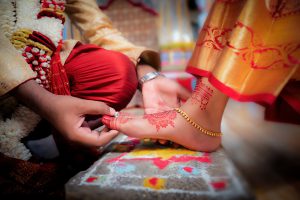
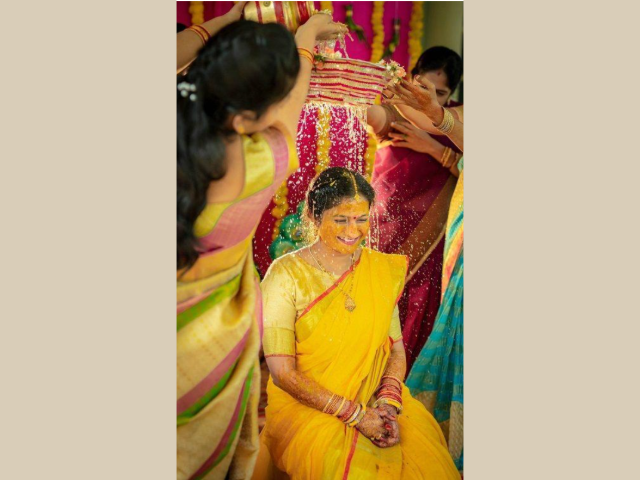
You might recognize the vibrant Haldi celebration of North India—bright turmeric paste, laughter, and blessing‑filled gatherings. But beneath the festive yellow lies an echo of a far older ritual: the bride’s ceremonial bath of water and gold, mirroring how Indra purified Apālā threefold (as sung in AV 14.1.41), sanctifying her for marriage.
Story
Apālā, the woman sage, who prayed to Indra to give her physical perfection for getting a good married life, and Indra’s blessings to her, refining her three times through the nave of a cart, a chariot, and yoke, is remembered. Although in Rigveda, this comes in Apālā’s hymn (since it is composed by her), the Aryan culture considered it a blissful memory of Indra’s blessing and sanctification of the girl of all her bodily imperfections. Thus, this mantra appears inside the marriage portion of Śaunaka Atharvaveda , (AVŚ_14,1.41) and is hence also seen in works like Āpastamba.
Ritual
This is accompanied by a pouring of water over the bride’s head, through the yoke-hole and a piece of gold – reciting variants of AVŚ 14,1.40 (PS 18.4.9). Atharvaveda has a couple more mantras in this occasion, however much of these have not been utilized by most prevalent sutras – rather equivalent mantras for waters or bathing are recited from other Vedas.