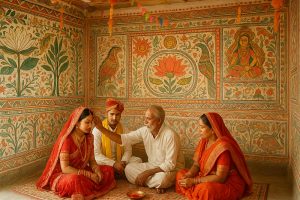
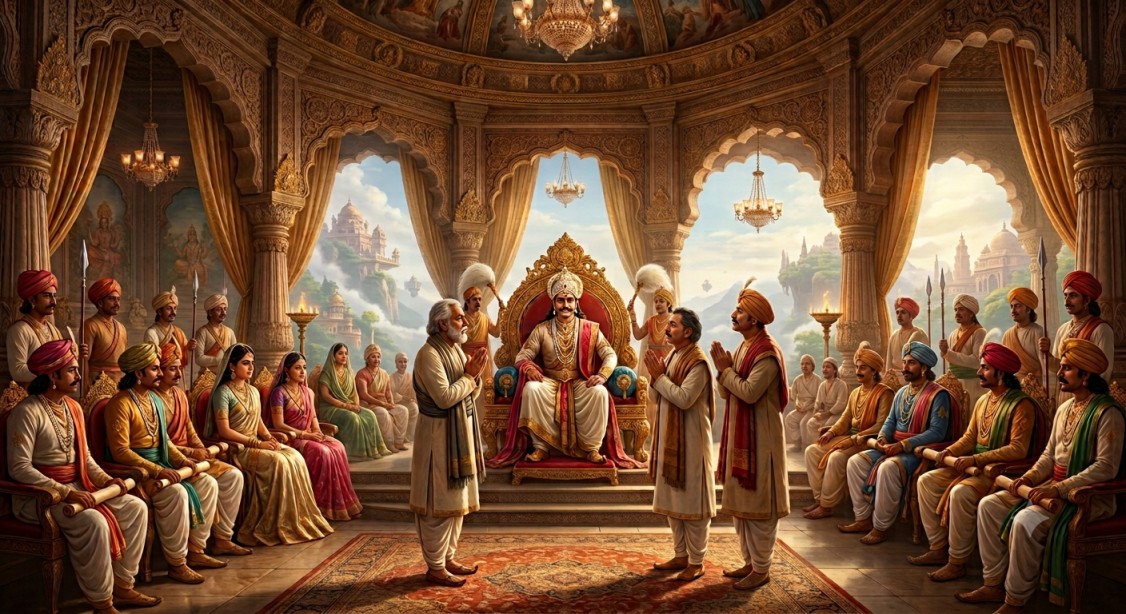
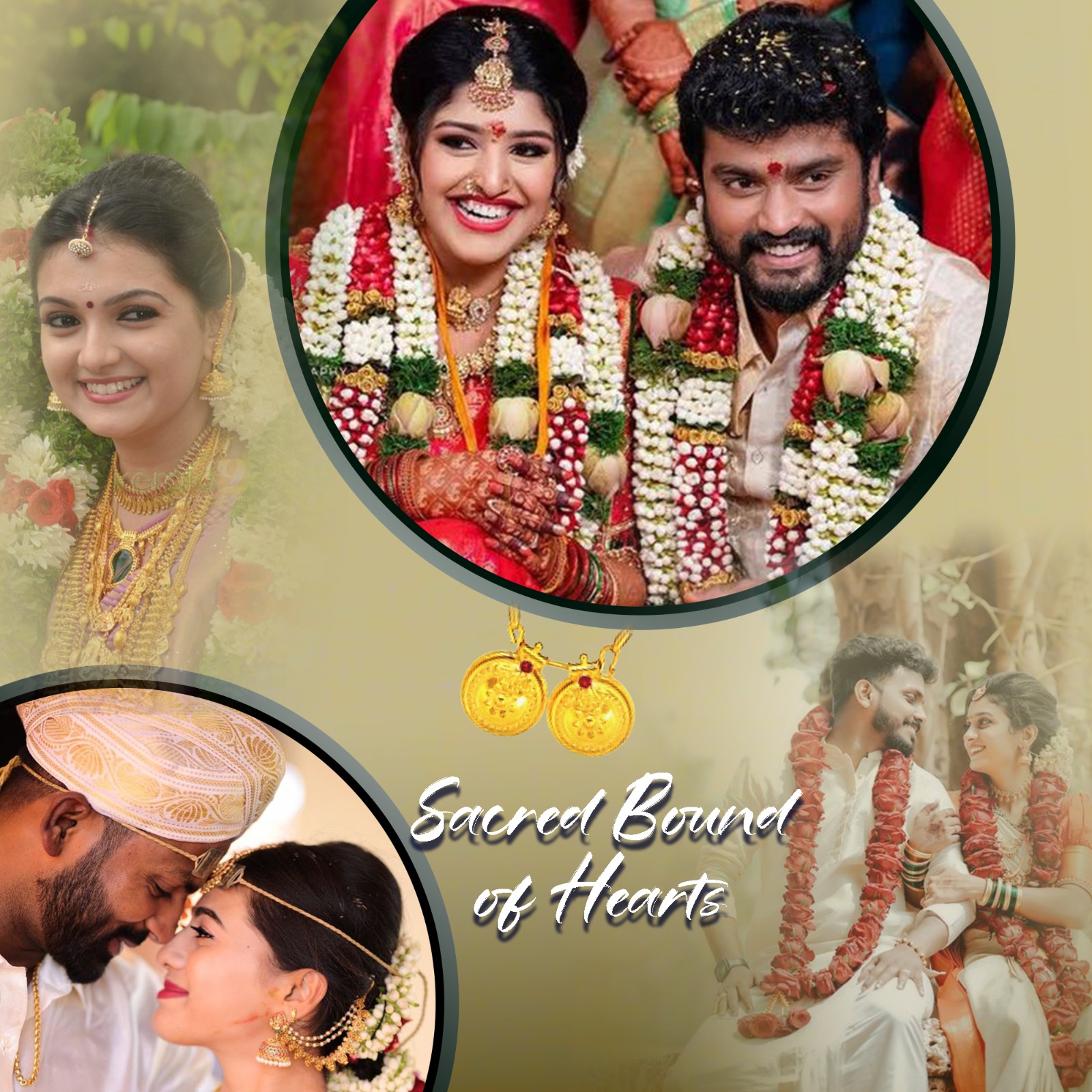
North Indian Vedic marriages are deeply spiritual, following ancient Hindu scriptures—vibrant, ritual-rich, and deeply rooted in Vedic traditions, with regional variations across states like Uttar Pradesh, Punjab, Haryana, Himachal Pradesh, and Delhi.
The ceremony is centered around the sacred fire (Agni), where the couple takes seven vows (Saptapadi), promising love, duty, and faithfulness. The rituals include Kanyadaan, Mangal Pheras, and Sindoor & Mangalsutra, along with unique regional customs such as Anand Karaj (blissful union), Kalire Ceremony, and Chooda Ceremony in Punjab; Dham & Dhaam Tradition in Himachal Pradesh; Dhuliargh & Nayano Pher in Uttarakhand; and Joota Chupai.
Chooda Ceremony (Punjabi Bride’s Red Bangles)
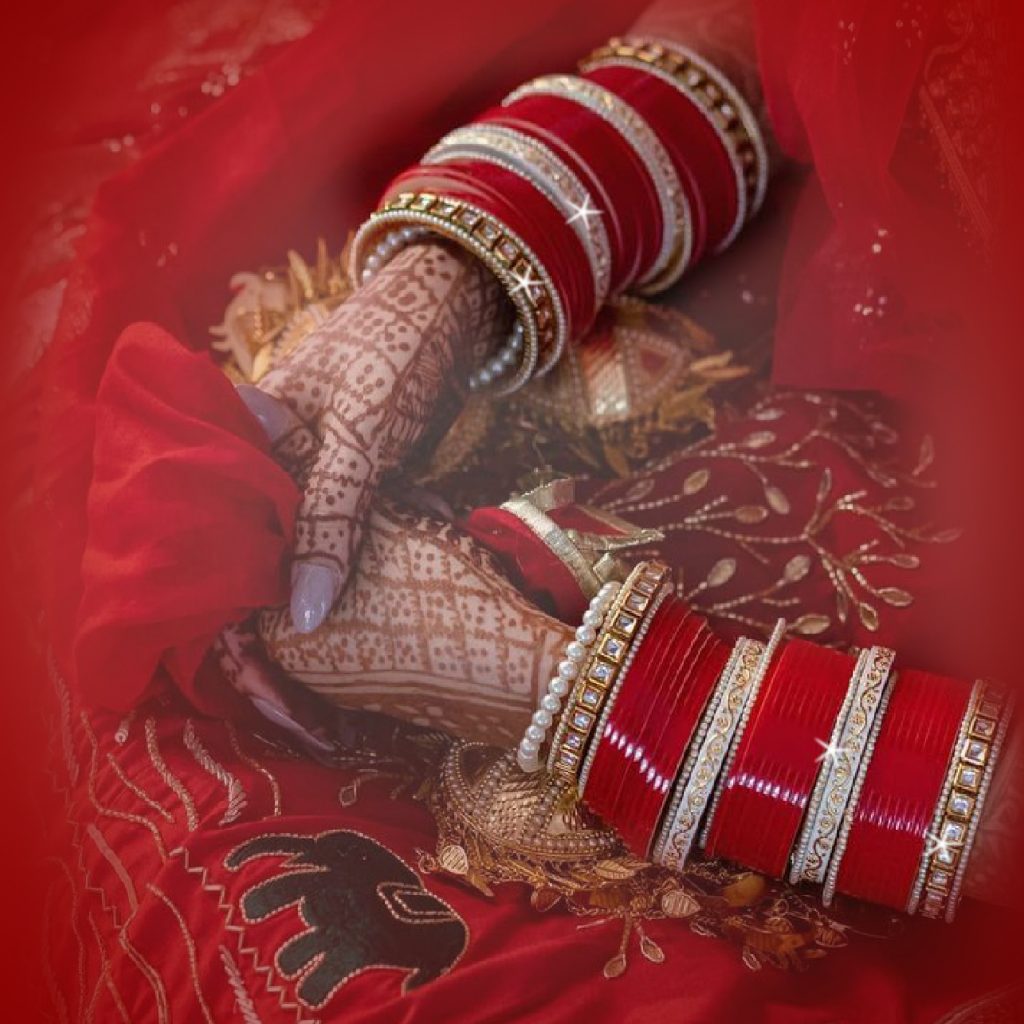
The bride wears a set of red and white ivory bangles (chooda) blessed by elders. These are typically worn for months after marriage as a sign of good luck and prosperity.
What is Chooda?
Chooda is a set of red and white ivory bangles (now often plastic or acrylic), traditionally 21 in number, worn by the bride. These are gifted by the maternal uncle (mama) and aunt (mami).
Ritual Process
- Purification Ritual (Puja): A small puja is performed to bless the bangles, invoking prosperity and happiness for the bride.
- Wearing the Chooda: The mama and mami slip the chooda onto the bride’s wrists, while elders give their blessings.
- Wrapping with Cloth: After the ceremony, the chooda is covered with a white cloth to protect it from the evil eye and is unveiled only during the wedding.
Symbolism of Chooda: Represents marital bliss, fertility, and good fortune. Traditionally worn for 40 days to over a year, depending on custom, although modern brides may wear it for a shorter time.
Punjabi Wedding: Kalire Ceremony
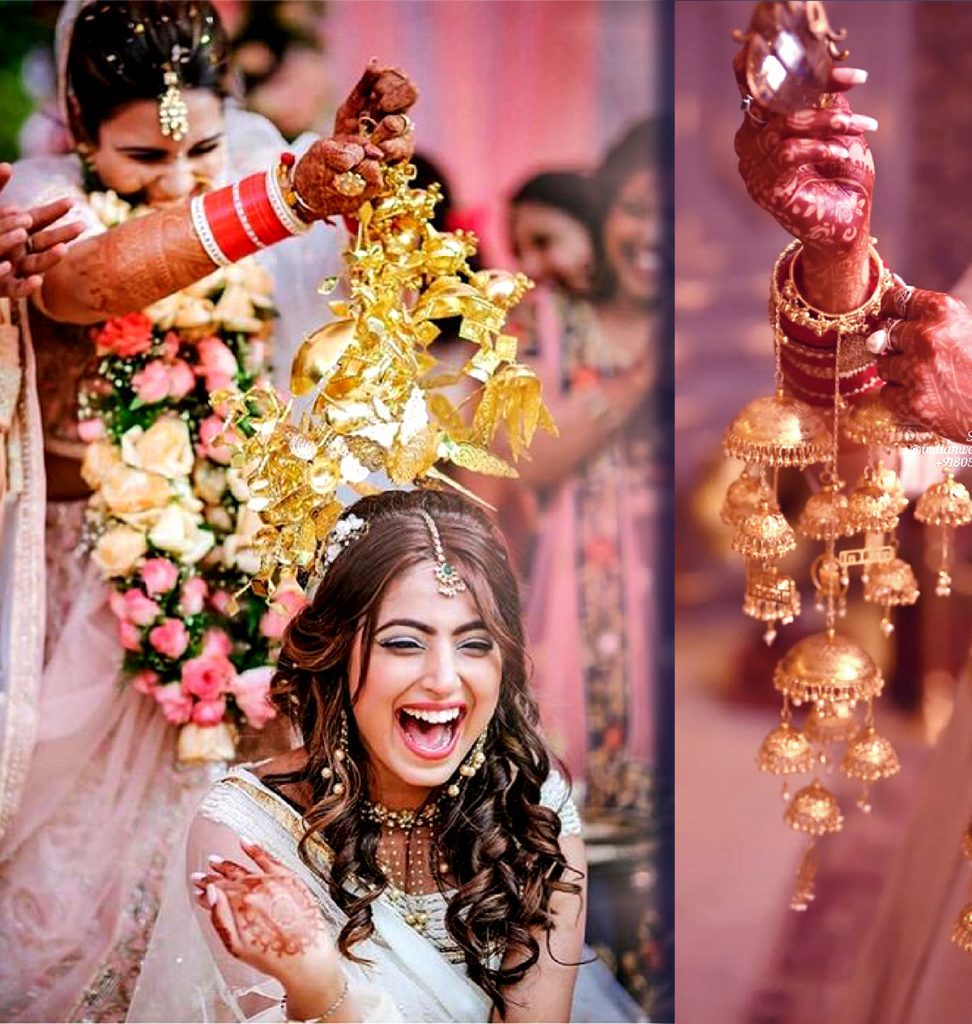
The bride wears kalire (hanging ornaments) on her bangles. She shakes them over unmarried girls’ heads—if one falls, it is believed that girl will marry next!
What is Kalire?
Kalire (also spelled Kaleere) are dangling ornaments made of gold or silver, often embellished with beads, shells, or flowers. These are tied to the bride’s bangles (chooda) by her sisters, cousins, and friends.
Significance of Kalire Ceremony
- Blessings & Protection: Kalire symbolize love, prosperity, and protection for the bride as she begins her new journey.
- Reminder of Loved Ones: They remind the bride of her maternal home and loved ones even after she moves to her husband’s house.
- Fertility & Good Wishes: The coconut or shell shapes represent fertility and abundance.
Fun Ritual – Shaking Kalire
After the kalire are tied, the bride shakes her hands over the heads of unmarried girls. If a kalira falls on someone, it’s believed she’ll be the next to get married!
Anand Karaj
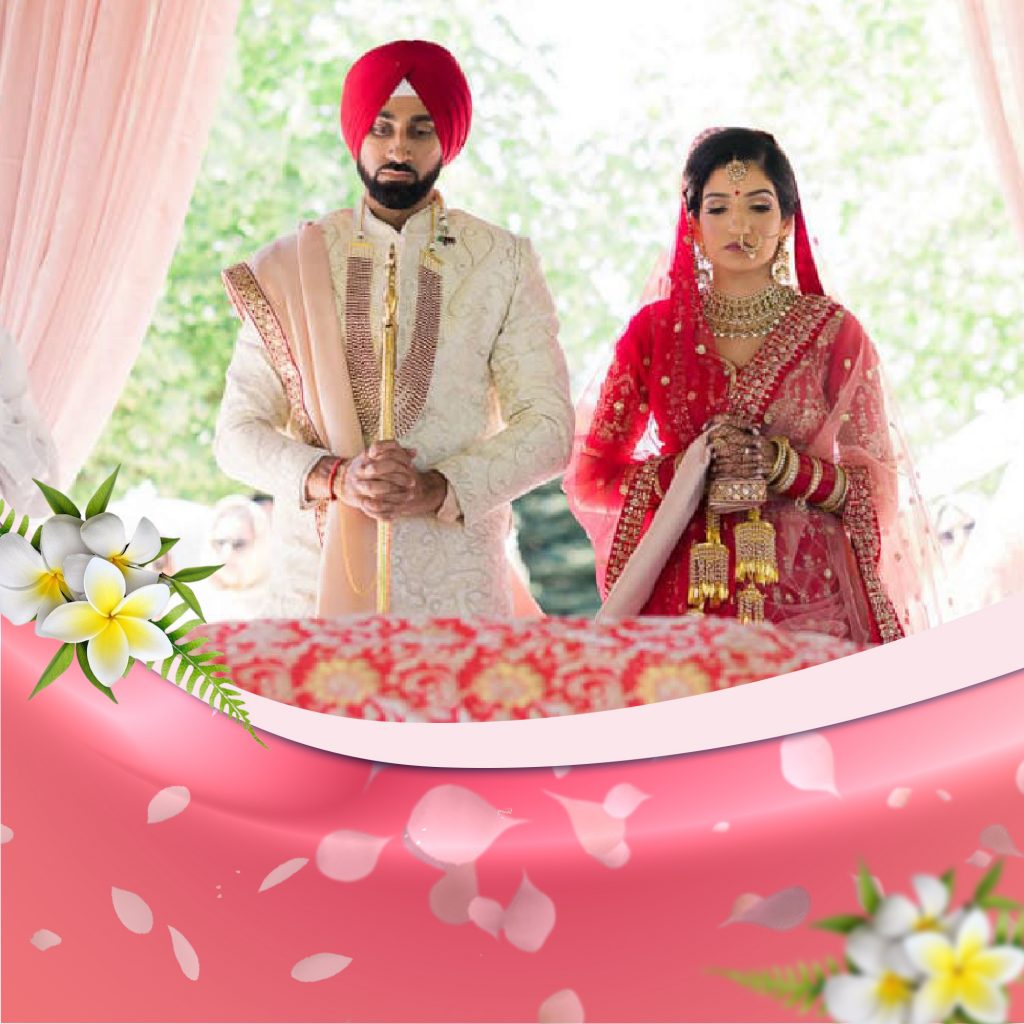
Anand Karaj is the sacred Sikh marriage ceremony, meaning “Blissful Union.” It is a beautiful and spiritual ritual performed in the presence of the Guru Granth Sahib, the holy scripture of Sikhism.
Main Rituals of Anand Karaj
- Milni (Meeting of Families): Before the ceremony, both families meet and exchange garlands or gifts. It signifies mutual respect and unity.
- Ardas (Prayer): The ceremony begins with a prayer to seek the blessings of Waheguru for the couple’s new journey.
- Lavan (The Four Rounds): The core of Anand Karaj. The couple walks around the Guru Granth Sahib four times, each round a step toward spiritual unity—1st Laav: duty to righteousness and marriage; 2nd Laav: growth of love and faith in the Lord; 3rd Laav: detachment from worldly things and connection to God; 4th Laav: harmony and spiritual union.
- Kirtan (Hymn Singing): Sikh hymns are sung during the ceremony, enhancing the spiritual atmosphere.
- Final Ardas & Hukamnama: A concluding prayer is offered, and a Hukamnama (verse from the Guru Granth Sahib) is read as divine guidance for the couple’s life.
- Langar (Community Meal): After the ceremony, a simple vegetarian meal is served to all guests, promoting equality and community spirit.
Himachal Pradesh: Dham & Dhaam Tradition
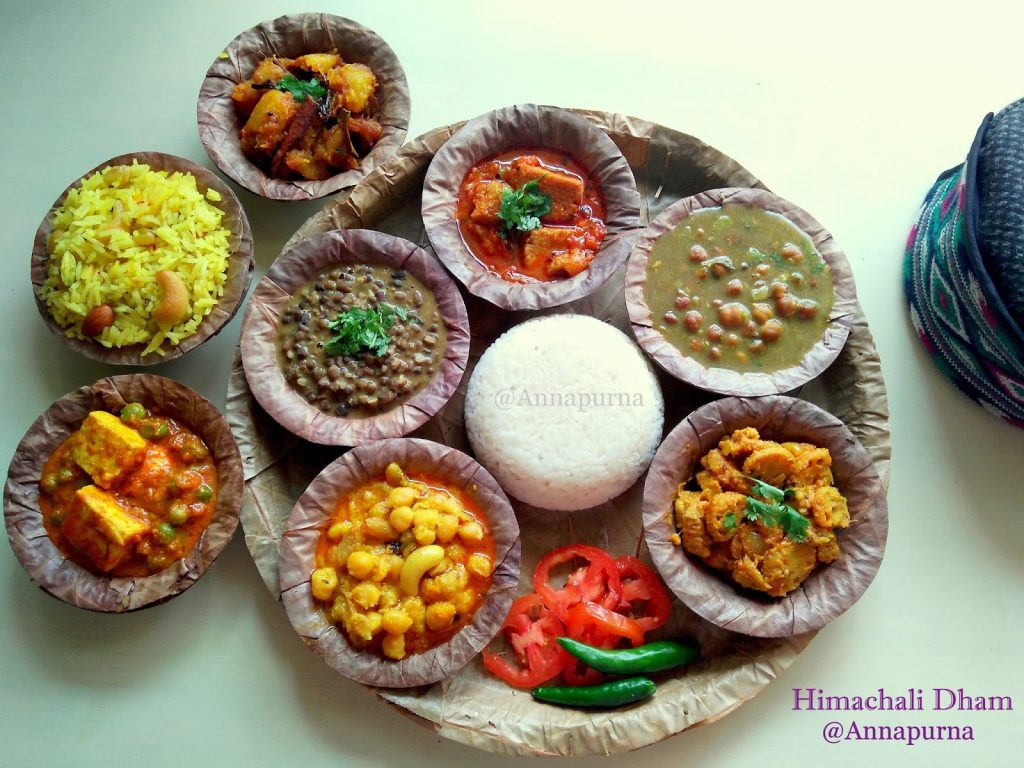
Post-wedding, the couple attends a traditional Dhaam feast, served on leaf plates with a fixed set of dishes made by Boti Brahmins. It’s a spiritual meal more than a party.
What is Dham?
Dham (or Dhaam) is a traditional festive meal served during weddings, festivals, and religious events in Himachal Pradesh. It’s not just food—it’s a ritualistic, cultural feast that reflects Himachali hospitality. A vegetarian meal, traditionally prepared by Boti/Botis (hereditary Brahmin cooks), cooked with locally grown lentils, rice, and spices using desi ghee, and served on green leaf plates (pattals) to seated guests on the floor.
Typical Dham Menu (Varies by Region)
Mandi / Kangra Style: Madra (chickpeas or kidney beans in curd gravy), Sepu Badi (urad dal dumplings in spinach gravy), Teliya Mah (mah dal in mustard oil), Chana dal & sweet rice (meetha bhaat), Khatta (tangy tamarind dish).
Chamba Style: Madra, Rajma, Chana dal, Khatta, Mitha (sweet rice with dry fruits).
Cultural Significance: Offered to deities before being served to guests. Symbolizes community bonding, equality, and celebration of local tradition. The order and sequence of serving is fixed and followed religiously.
Dhuliargh & Nayano Pher (Uttarakhand)
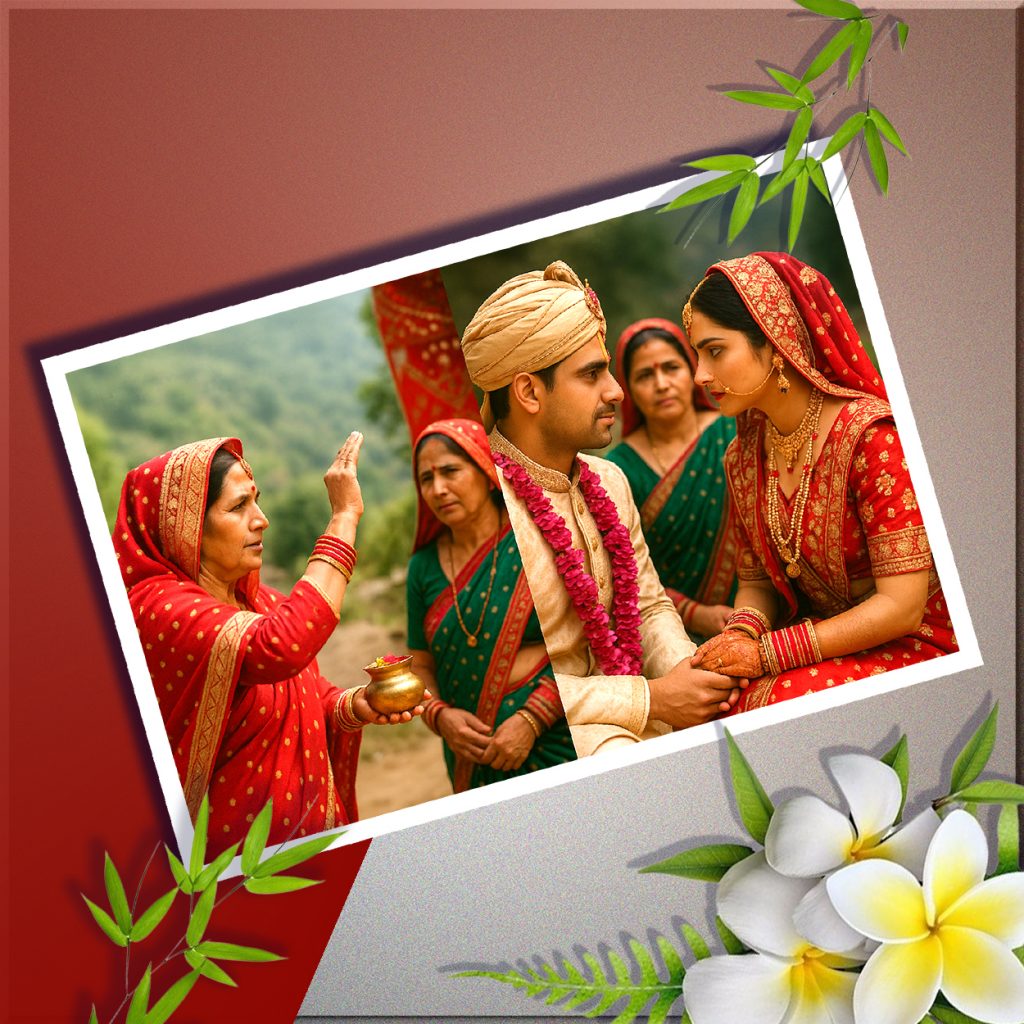
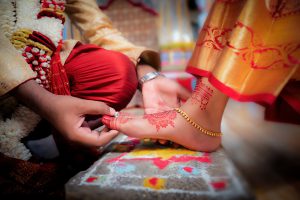
The bride touches her husband’s feet, and in return, he helps her walk across a symbolic river using a ritual involving cloth and rice.
Here’s a region-specific look at Dhuliargh and Nayano Pher in Uttarakhand (both Kumaoni and Garhwali traditions).
Dhuliargh – Traditional Groom Welcome
In the mountainous villages of Kumaon and Garhwal, the Dhuliargh is a sacred and respectful way to welcome the groom when he arrives with the baraat.
Key Elements
- Bride’s mother or elder female performs a tilak and aarti.
- A lota (brass/copper pot) filled with water, milk, rice, or flower petals is used for the “arghya” (ritual offering).
- The groom is treated like Lord Vishnu, symbolizing that the bride is Goddess Lakshmi joining him.
- Folk songs and drums (dhol–damau) are played during the welcome.
- A traditional red cloth (pichora) is often held or worn by elders during the greeting.
Nayano Pher – Eye Contact Ritual
One of the most emotional and symbolic rituals in Uttarakhand weddings, performed after the wedding vows and just before the bride’s departure. The bride and groom gaze into each other’s eyes silently, often while sitting or standing close.
This symbolizes mutual acceptance and a silent promise of togetherness—the beginning of emotional intimacy. Few words are spoken; the moment is usually accompanied by teary-eyed relatives, especially the bride’s family. In some regions, elders guide the couple, telling them softly to remember each other in joy and sorrow.
Joota Chupai (Hiding the Groom’s Shoes)
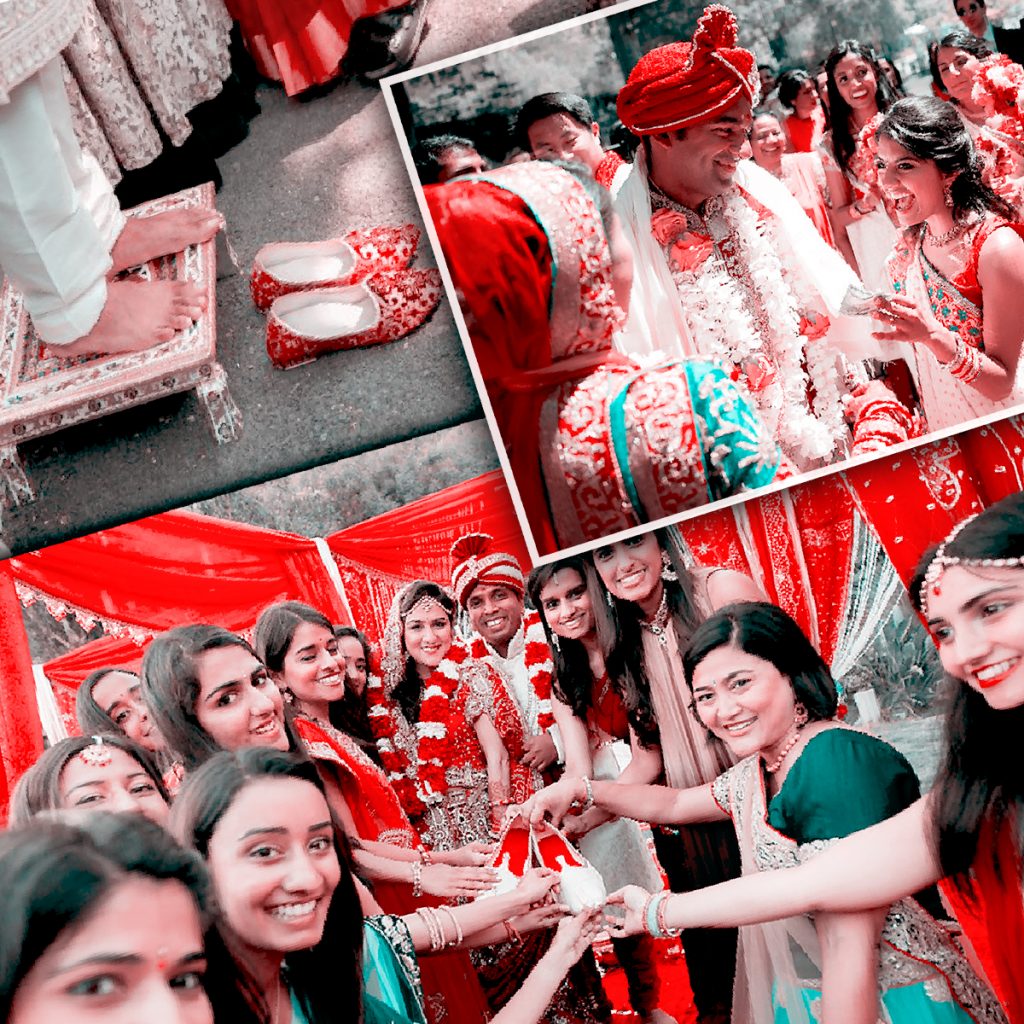
The bride’s sisters and friends steal the groom’s shoes during the ceremony and demand money to return them. It’s a playful ritual filled with bargaining, laughter, and fun.
What Happens in Joota Chupai?
During the wedding ceremony, when the groom removes his shoes before stepping onto the mandap (wedding altar), the bride’s sisters, cousins, and friends secretly steal and hide his shoes.
After the wedding rituals are completed, the groom has to negotiate, beg, or bribe to get his shoes back. The girls demand money, gifts, or playful promises in exchange.
Why It’s Celebrated
- Adds Humor & Bonding: It’s a light-hearted way to build fun interaction between the bride’s and groom’s sides.
- Symbol of Welcome: The bride’s family uses this ritual to tease and test the groom, symbolizing that he has to earn his place.
- Creates Lasting Memories: It brings laughter, jokes, and joy, often turning into a friendly tug-of-war.